- Less standing water and yard flooding
- Culverts and pond outlets flowing again
- Storm-downed trees pulled from channels
- Track equipment suited to soft banks
- Debris and sediment hauled away
Why Drainage Features Stop Working
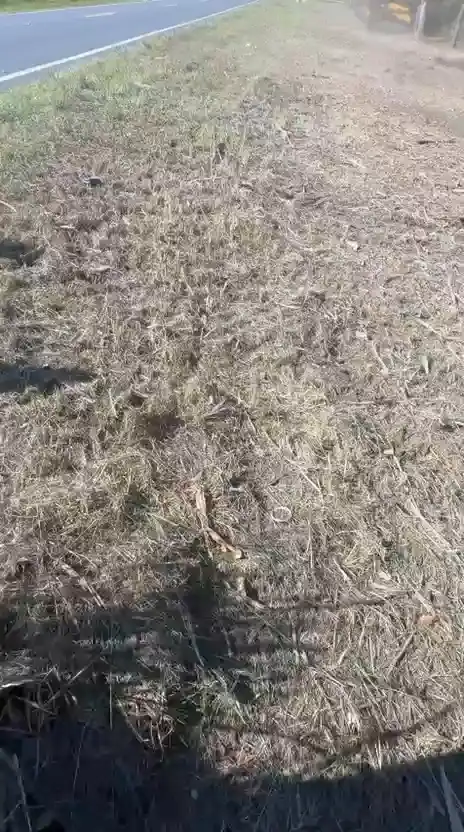
Most private and commercial properties around Tampa rely on open drainage: a roadside ditch, a grassy swale between lots, a culvert pipe under a driveway, or a retention or detention pond behind a shopping center or subdivision. Left alone, those features fill in. Florida's long growing season lets Brazilian pepper, willow, cattails, vines and young trees take over a ditch in a few years. Sand washes in from every rain and settles in low spots. Roots grow across the flow line, and storms drop whole trees into the channel.
The result is standing water, flooded yards and driveways, washouts at culvert ends, and ponds that no longer hold the volume they were designed for. It is usually most noticeable during the summer rainy season and after a tropical storm, when the water has nowhere to go.
What We Clear and Restore
Our work focuses on the vegetation, debris and soil that block water. We do not perform municipal storm sewer jetting or pipe camera inspection. What we do well is open up the surface drainage on your land:
- Drainage ditches: cutting and removing brush, small trees and vines along the banks and bottom
- Swales: clearing overgrowth and re-establishing a gentle, even profile so water sheets toward the outlet
- Culvert ends: pulling out logs, root masses, trash and built-up sand at the inlet and outlet
- Retention and detention ponds: clearing woody growth from banks and removing accumulated sediment where equipment can reach
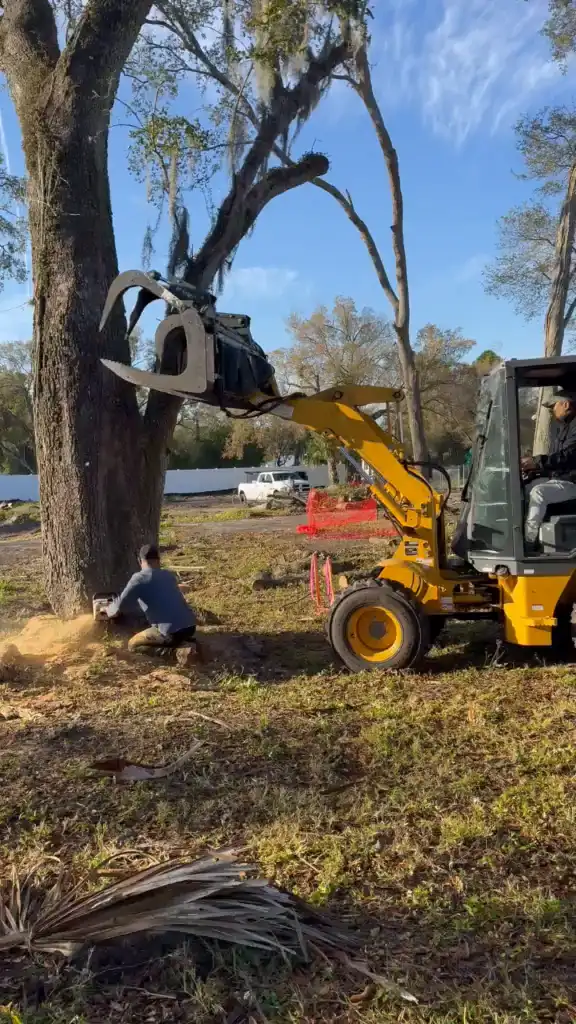
- Fallen trees: cutting and lifting storm-downed trunks out of channels
Where tree roots have invaded the flow line, our root removal work takes them out so they do not regrow into the same spot.
Equipment and Method
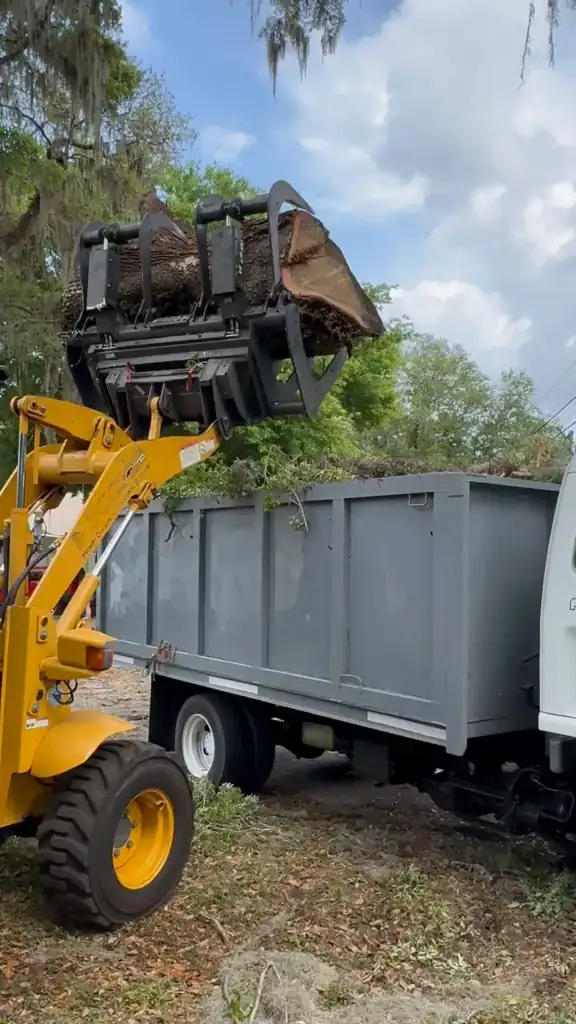
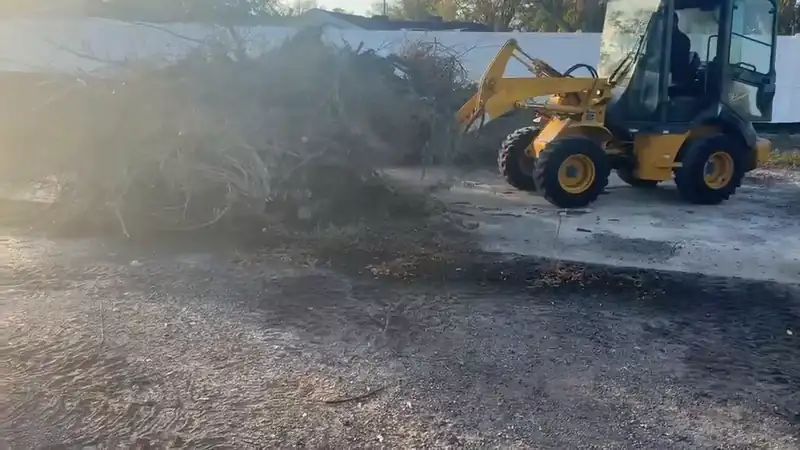
A compact track loader is the workhorse on drainage jobs because its tracks keep it stable on soft, wet banks. With a forestry mulcher head it reduces bank brush in place; with a bucket or grapple it pulls sediment and logs from the channel. Larger trunks are cut with chainsaws and lifted out with the wheel loader and log grapple, then hauled away in the dump trailer as part of our debris removal.
Once the channel is open, we shape the bottom and side slopes so water follows a consistent grade instead of pooling. On flatter parcels this often ties into land leveling to direct runoff toward the ditch in the first place.
Timing Around the Rainy and Hurricane Seasons
The best time to clean a ditch or pond is before it is needed. In west-central Florida the dry months, roughly late fall through spring, give firmer ground and lower water levels, which makes equipment work cleaner. A pre-season cleanout ahead of June lets your drainage handle the daily summer downpours. After a hurricane or major storm, we come back to remove the trees, limbs and silt that the storm pushed into the system.
Work inside wetlands, jurisdictional waters or permitted stormwater systems may require approval from the county or water management district. We can explain what is usually needed, but check with the agency that oversees your property before major reshaping.
Properties We Serve
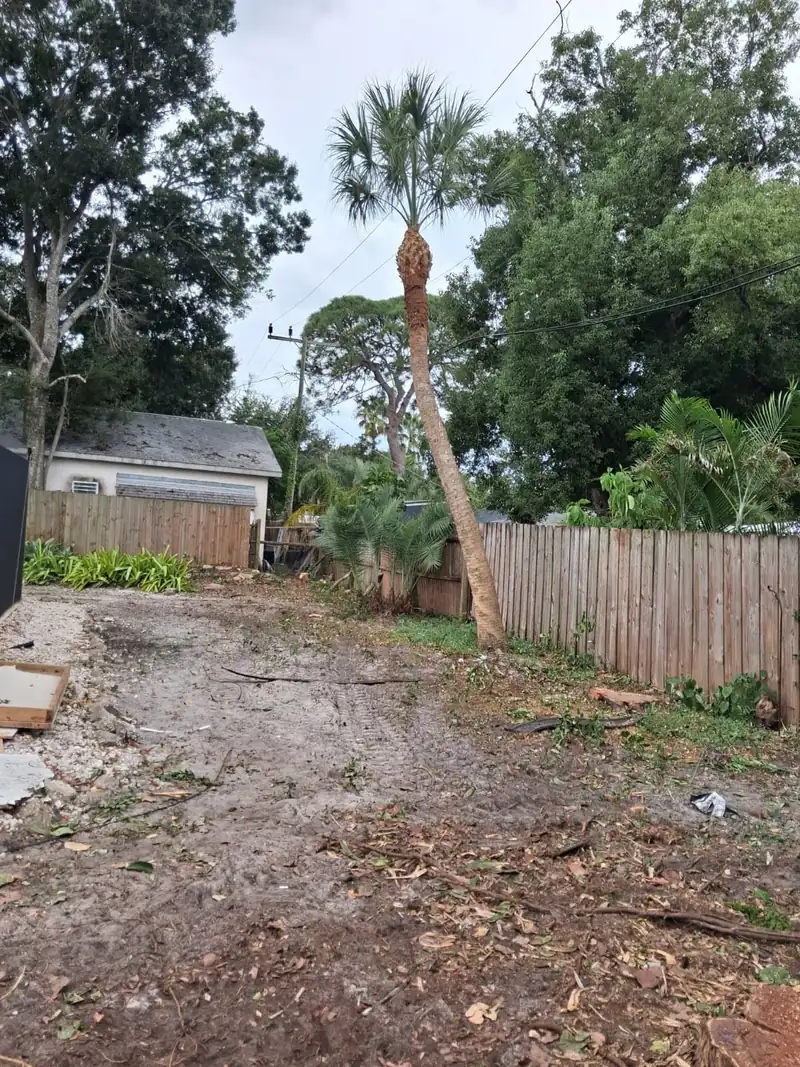
We work for homeowners with a backyard swale that holds water, farm and ranch owners with miles of field ditches, HOAs responsible for community ponds, and commercial property managers with detention areas behind parking lots. Calls come from low-lying areas like Riverview and Ruskin, from pasture land around Wauchula, and from all over the 100-mile area we cover around Tampa.