- Less fuel close to your home and barns
- Firebreaks that slow fire and give access
- Forestry mulching with no burning
- Ladder fuels removed from tree trunks
- Better visibility and usable land
Wildfire Risk in West-Central Florida
Many people don't think of the Tampa Bay region as wildfire country, but brush fires are a regular part of life here. The risk is usually highest during the dry season, generally from late winter into spring, before the summer rains start. Low humidity, wind and dry vegetation can let a small fire move quickly, especially through pine flatwoods and sandy scrub.
Homes on acreage and at the edge of woods are most exposed. That includes rural parts of Pasco, Hernando and Polk counties, as well as large wooded lots in growing suburbs. The good news is that the fuel near your home is something you can control.
Fuels We Reduce
- Saw palmetto. Its oily fronds burn hot and fast, and dense stands carry fire close to structures.
- Scrub and dense underbrush. Wax myrtle, gallberry, scrub oak and young trees create a continuous fuel layer.
- Pine needles and leaf litter. Thick layers on the ground, roofs and gutters catch embers easily.
- Dead wood. Fallen limbs, standing dead trees and old brush piles add heavy fuel that burns a long time.
- Ladder fuels. Low limbs and vines that let a ground fire climb into tree canopies.
Defensible Space and Firebreaks
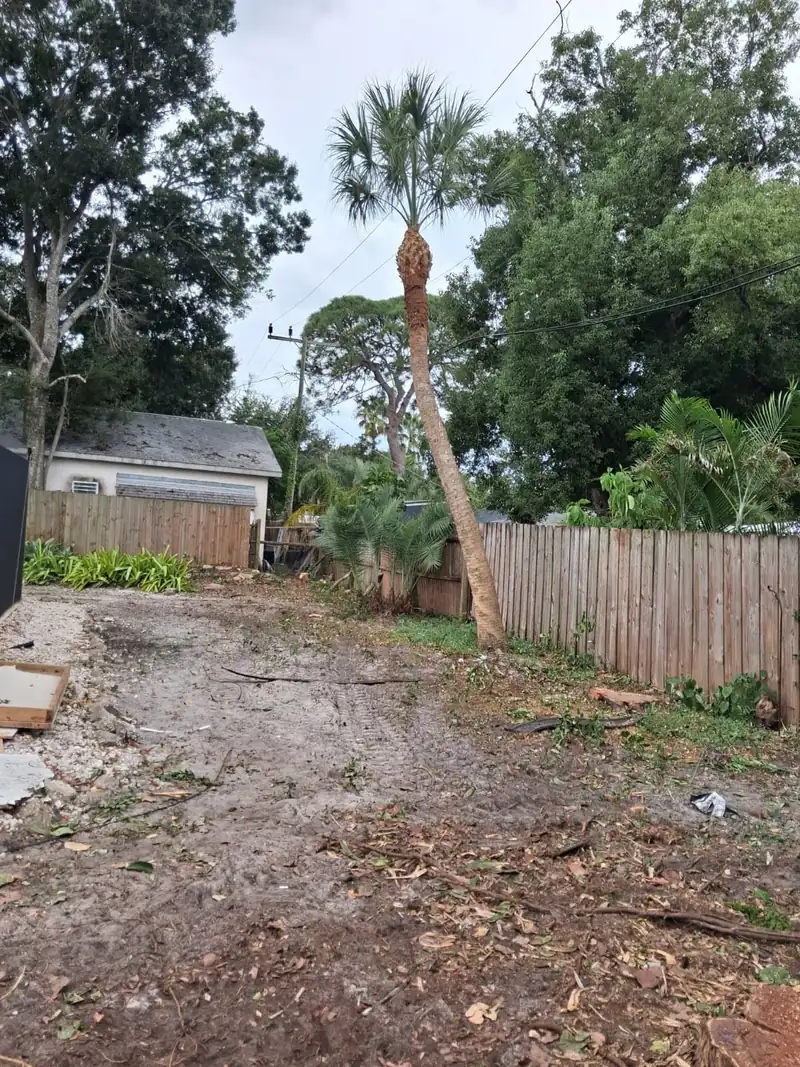
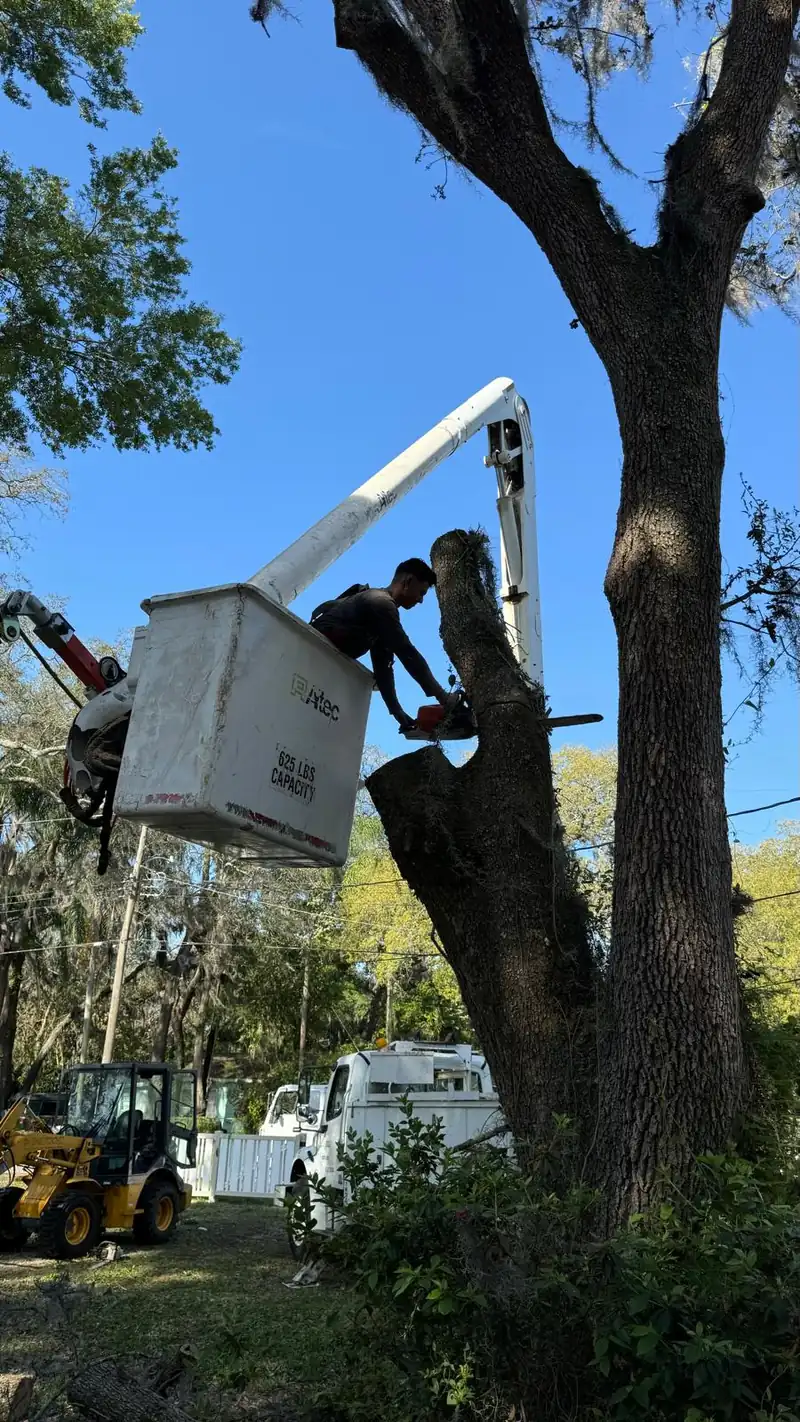
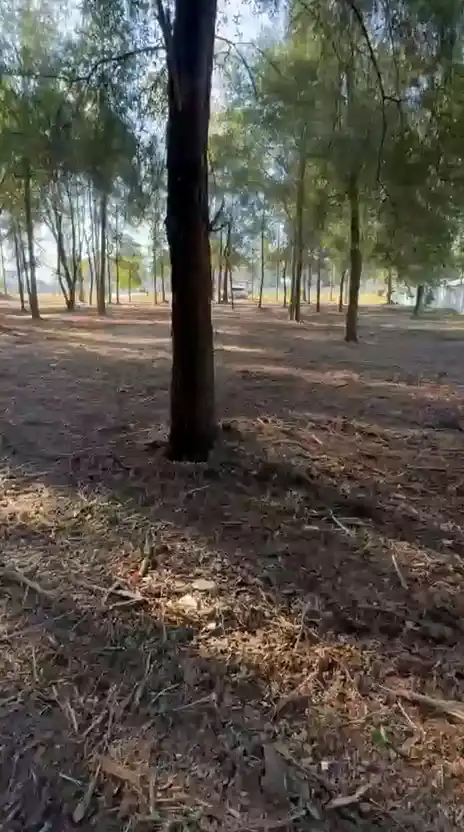
Defensible space is the buffer around a building where fuel is kept low and spread out. Closest to the house, the goal is very little that can burn. Further out, vegetation is thinned so fire stays on the ground and slows down. We clear palmetto and brush away from the structure, remove dead material, and lift low limbs on nearby pines and oaks with tree trimming so flames can't climb.
Firebreaks are cleared strips that interrupt the fuel across a property. We cut them along fence lines, property boundaries and around barns, pastures and equipment areas. A firebreak also gives you and emergency crews a path to move along the property.
How We Do It: Mulching and Brush Clearing
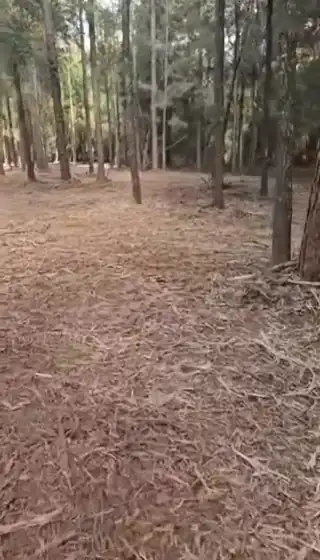
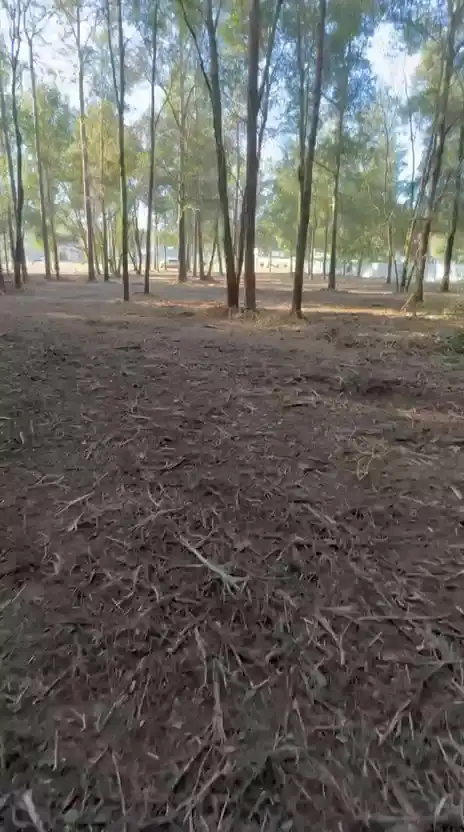
Our main tool is forestry mulching. A compact track loader with a mulcher head grinds palmetto, brush and small trees right where they stand, turning standing fuel into a thin layer of mulch on the ground. This layer is much less flammable than upright palmetto and scrub, and it holds the soil in place without burning or hauling.
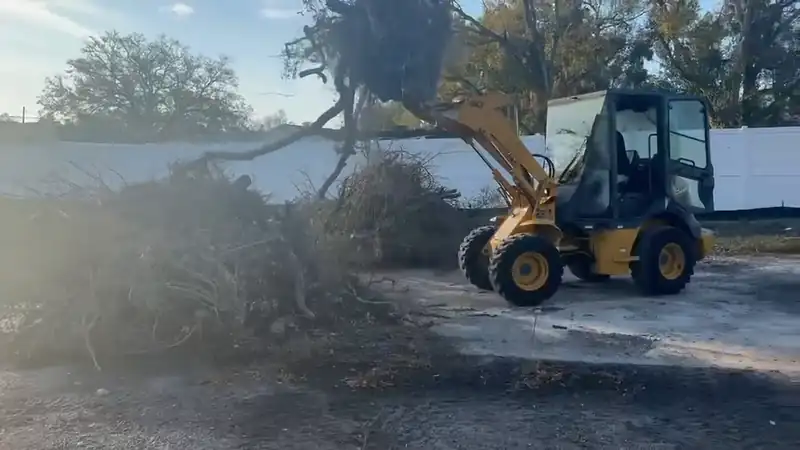
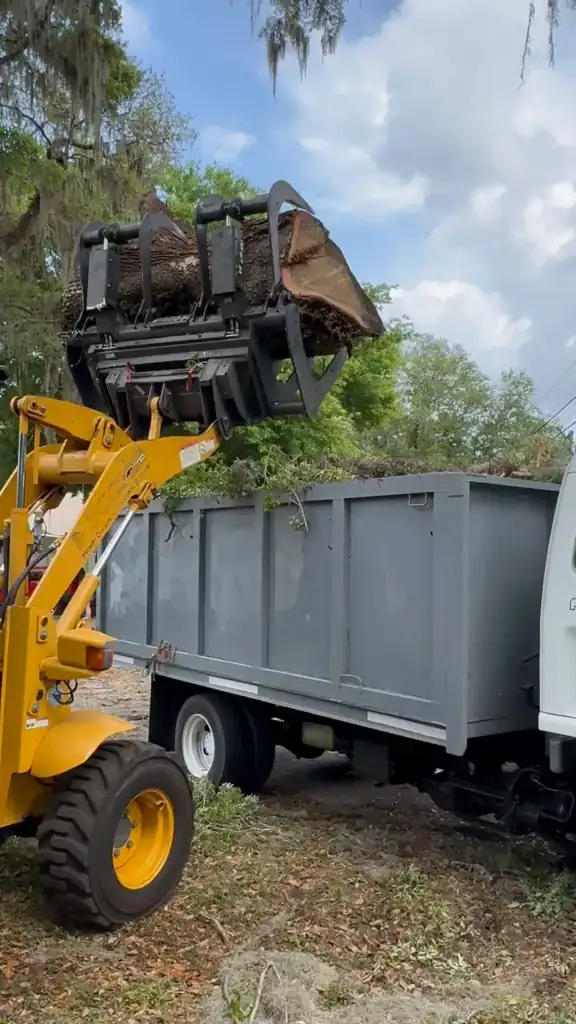
Where we need a cleaner finish, such as close to a house or along a driveway, we use brush clean up with chainsaws and hand work, and haul material off with our dump trailer. Dead trees and big limbs can be cut and removed, and loose piles go away through debris removal. For heavily overgrown parcels, the job can grow into full land clearing.
Who Benefits and Where We Work
Fire risk reduction is valuable for rural homeowners, ranchers with barns and hay storage, owners of vacant wooded land next to subdivisions, and HOAs with natural buffer areas. The best time to schedule is before the dry season peaks, and maintenance every few years keeps palmetto from growing back to dangerous levels. We serve a 100-mile radius around Tampa, including scrub and pine country near Spring Hill, Lake Wales and San Antonio.