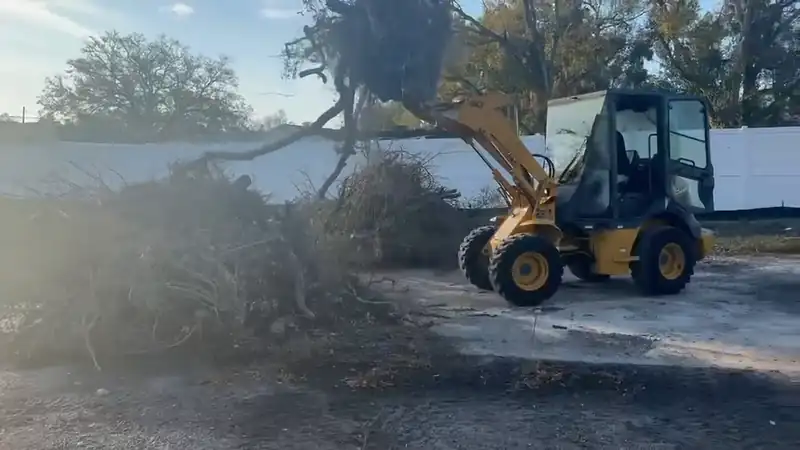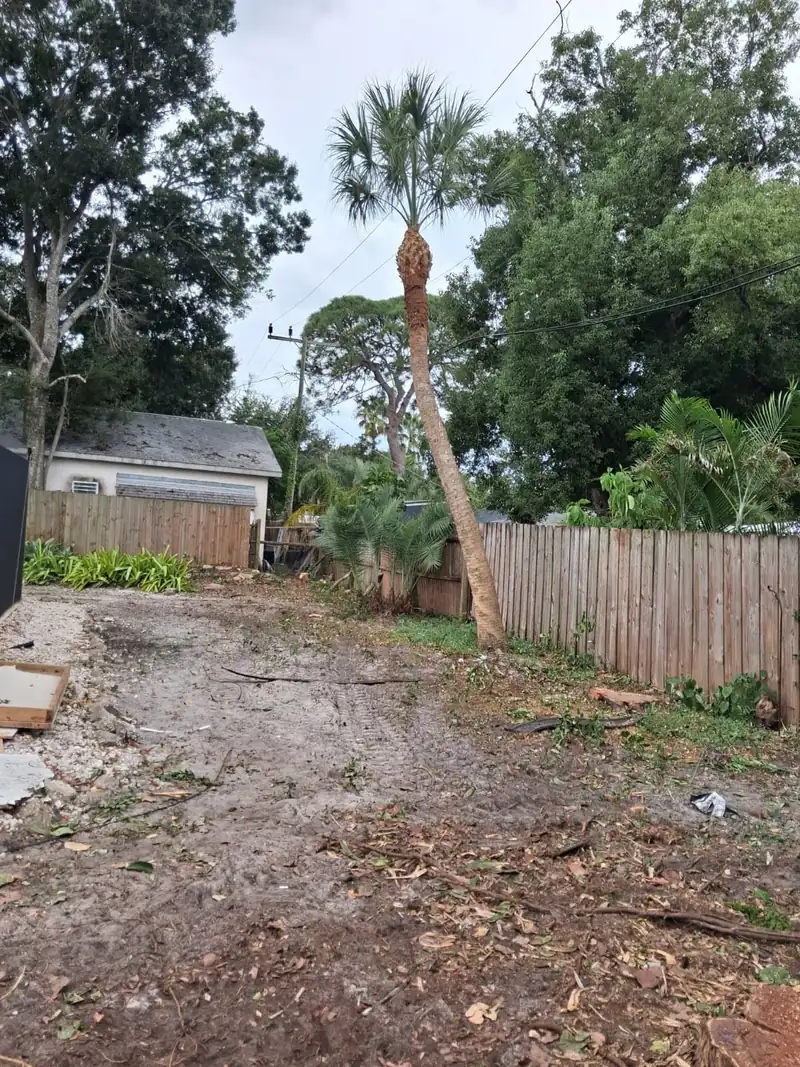

- No burning and no debris hauling
- Mulch layer helps control erosion
- Selective: keep the trees you want
- Handles thick saw palmetto
- Low soil disturbance on sandy ground
How Forestry Mulching Works
A forestry mulcher is a heavy rotating drum lined with carbide teeth, mounted on the front of a compact track loader. The operator walks the machine into the vegetation and the drum shreds standing brush, vines and small to medium trees from the top down, then works the stems and stumps to ground level. Everything is reduced to coarse wood chips that fall in place and form a mulch mat across the cleared area.
Because the machine runs on tracks and does not drag material around, the soil stays mostly undisturbed. Roots remain in the ground holding the sand together, and the mulch layer shields it from heavy rain. That is a big advantage over bulldozing on Florida's loose sandy soils, which can wash badly once they are scraped bare.
Where Mulching Is the Right Tool
Mulching shines on land where you want to remove the understory but keep the property natural, or where hauling debris would be slow and expensive. Common jobs include:
- Acreage and homesteads: opening up overgrown woods so you can see and use the land again
- Ranches and pasture edges: pushing back encroaching brush and wax myrtle that steal grazing ground
- Trails and hunting land: cutting walking, ATV and shooting lanes through dense cover
- Fence lines: clearing a clean strip so fencing can be built or repaired
- Saw palmetto: grinding thick palmetto stands, which are notoriously hard to clear by hand
- Firebreaks: creating fuel breaks that slow wildfire across scrub and pine flatwoods
Firebreak work pairs naturally with our fire risk reduction service, and a mulched path can become the starting point for access road construction.

Mulching Compared With Traditional Clearing
Traditional land clearing pushes trees over, piles them, and then either burns or hauls the piles. That is still the right approach when you need bare dirt for a foundation or driveway. Mulching is selective. You can mark the oaks and longleaf pines you want to keep and we will clear around them. The result looks like a managed woodland or park rather than a stripped lot.
- No burn permits or smoke issues with neighbors
- No trucking cost for debris
- Less erosion and fewer washouts after storms
- The mulch breaks down over time and returns organic matter to sandy soil
For building lots that need to be stripped to soil, see lot clearing instead.
Land Types We Mulch
Within our roughly 100-mile service area, the terrain changes a lot. We mulch pine flatwoods and palmetto prairie in the Heartland around Arcadia and Sebring, sandy scrub and oak hammocks on the Nature Coast near Brooksville, and rolling pasture and former citrus ground in east Pasco near Zephyrhills. Each type of growth behaves differently under the head, and we plan the job around it.

What to Expect After Mulching
Right after the job, the ground will be covered with a few inches of fresh wood chips. Some brush species will try to resprout from roots, especially in the first growing season. Many landowners schedule a lighter follow-up pass a year or so later to keep the land open. If you plan to plant pasture grass or build in a mulched area, let us know up front so we can adjust how deep we grind.